Artist ransome Traces African American Roots in Solo Exhibition
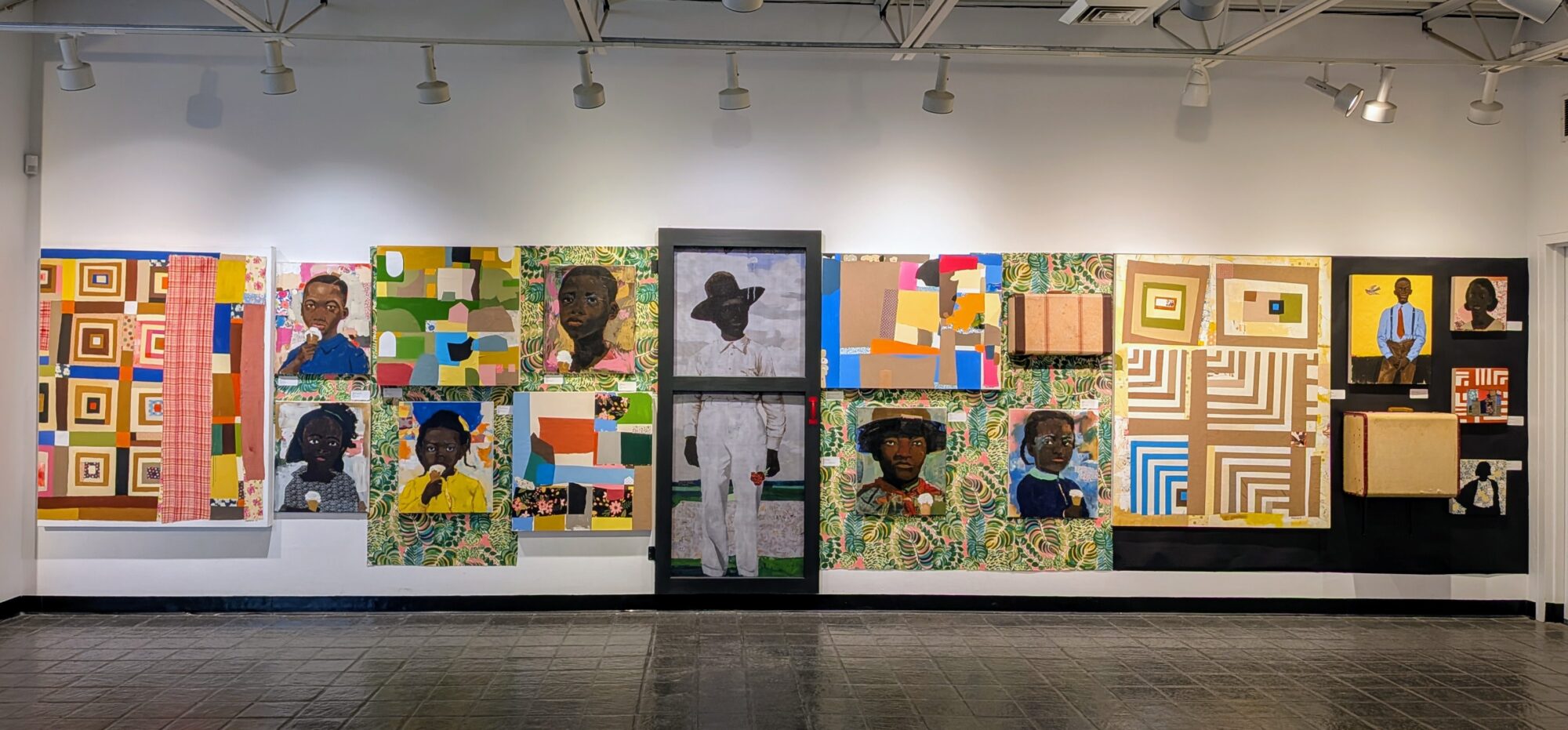
An artist’s legacy is not always straightforward. In the case of Alexander Rutsch, it represents his prolific creative output, but also his 25 years of active support of the local artistic community around Pelham Art Center (PAC). It’s why, when Rutsch’s family and friends wanted to continue his legacy after the artist’s passing, they established a generous fund to support a biennial award for painting at PAC in the artist’s name. ransome, the recipient of this year’s Alexander Rutsch Award, was selected by jury from 560 applicants nationwide and his work is presented in a solo exhibition, So Fresh and So Clean: The New Negro, through July 13.
According to the center’s managing director Bridget Bettke, the selection of ransome as the winner was “blind” and based purely on images submitted online. Only during the final round did the jury explore the general artistic oeuvre of the ten finalists.
Ransome’s work is grounded in the artist’s exploration of his African American heritage, tracing its roots to the sharecropping community of the American South and specifically North Carolina, where he grew up before settling in New Jersey. ransome links his move to the East Coast to general migration of sharecroppers of the South to Northern cities. The link to the past and migration aspects can be traced through a site-specific wall installation consisting of portraits that allude to the first half of the 20th century, accompanied by old suitcases, a repurposed door, and collages made of textiles and wallpaper.
Connecting Past to Future
Artist Alexandra Rutsch, the daughter of Alexander Rutsch, described the installation as connecting past and the future. A man behind the door in Waiting for Ruby is signifying a “doorway into the past,” while children eating ice cream are looking into the future.
Another component of the exhibition is the embedding of materials such as textiles and old papers into abstract collages that were inspired by the practice of women quilters of Gee’s Bend, Alabama. These women utilized scraps to create complex textiles. In the brochure, ransome explains: “The materials I use are conceptual statements on the legacy of an often-overlooked portion of society that made something out of nothing.”
Alexandra Rutsch explained that ransome was selected for the award because his work is “really dynamic, uses bold colors, has an innovative approach to the collage and playfulness in expression.” She says that the jurors also appreciated that his portraiture, similarly to the award’s namesake, combined “figuration and abstraction” and was inspired by history.
Bettke described ransome as “a bold, dynamic painter who has a voice.” Boldness and innovation are most apparent in the two three-dimensional artworks called The Blocks. Each is made of three stacked cubes that stand on specially fabricated metal legs and are covered on all sides by acrylic and collage images. The cubes can be rotated to form a variety of visual combinations that may remind the viewer of children’s books, which is a nod to ransom’s own past as a book illustrator.
Alexander Rutsch and ransome: Common Threads
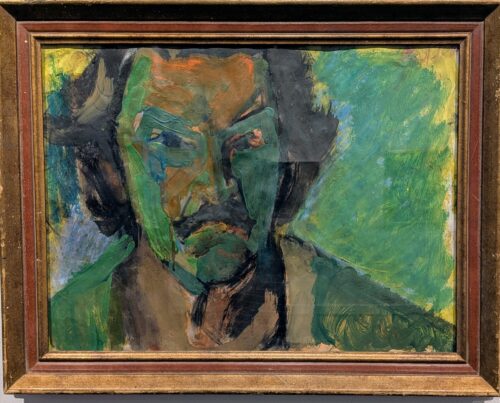
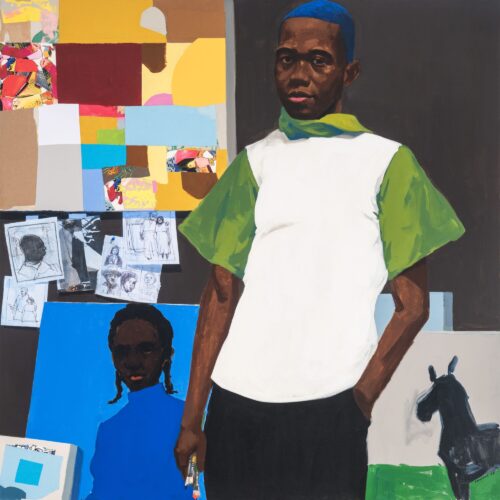
The exhibition brochure confirms that both ransome and Alexander Rutsch have expressed themselves “by layering imagery to deepen and enrich their composition.” The main gallery exhibition is supplemented with artworks by Alexander Rutsch that were selected to complement ransome’s works in style, color or theme. For instance, Rutsch’s Self-Portrait and ransome’s The Artist are reminiscent of each other in color and in complexity of execution.
Both tell a personal story. In Self-Portrait the Fauvist colors and stylized expressionistic features emphasize the intensity of the artist’s gaze and stylistically refer to his years spent in Paris in the 1950s. The brochure clarifies that “his portraits are crisp, intense, spare linear characterizations that convey empathy.” Ransome, on the other hand, tells the story of an artist whose work is informed by his cultural identity; the acrylic portrait is surrounded by the kaleidoscope of other artworks, a portrait of a young woman, a depiction of a horse, a medley of pencil drawings displaying people, and a brightly colored abstract paper and fabric collage.
Visitors to PAC are invited to observe a tangible connection between two artists who belong to different times and backgrounds while still witnessing Rutsch’s legacy of supporting future generationsof local talent.
So Fresh and So Clean: The New Negro is on view at Pelham Art Center through July 13.
You May Also Enjoy
- Ali Banisadr: A History of the World — on view at Katonah Museum of Art
- From the CEO: A Message About Federal Arts Cuts
- More Than a Dozen Upcoming Jazz Concerts in Westchester
- 2025 Film Festivals in Westchester
- Schoolhouse Theater: A 40th Season with Jazz, Scandal and Mishaps
- Westchester Ballet Company: Turning 75 With Plans of the Future
- Adam Levi: Sculpting the Way Art is Viewed in Rye
- Caramoor’s 80th Season is for Dabblers and Devotees Alike
photos: (top) ransome’s work on view in the gallery at Pelham Art Center (photo by Yana Rolnik)
(left to right): Alexander Rutsch, Self Portrait (photo by Yana Rolnik); ransome, The Artist (photo courtesy of Pelham Art Center)
About Yana Rolnik
Yana Rolnik is a freelance art historian and full-time Director of Software Engineering at Confluence Technologies. She has a Bachelors in Computer Science, Masters in Art History, and is pursuing Masters in Entrepreneurship in the Arts.