Janet Langsam: From Artist to Artists’ Advocate and Back Again
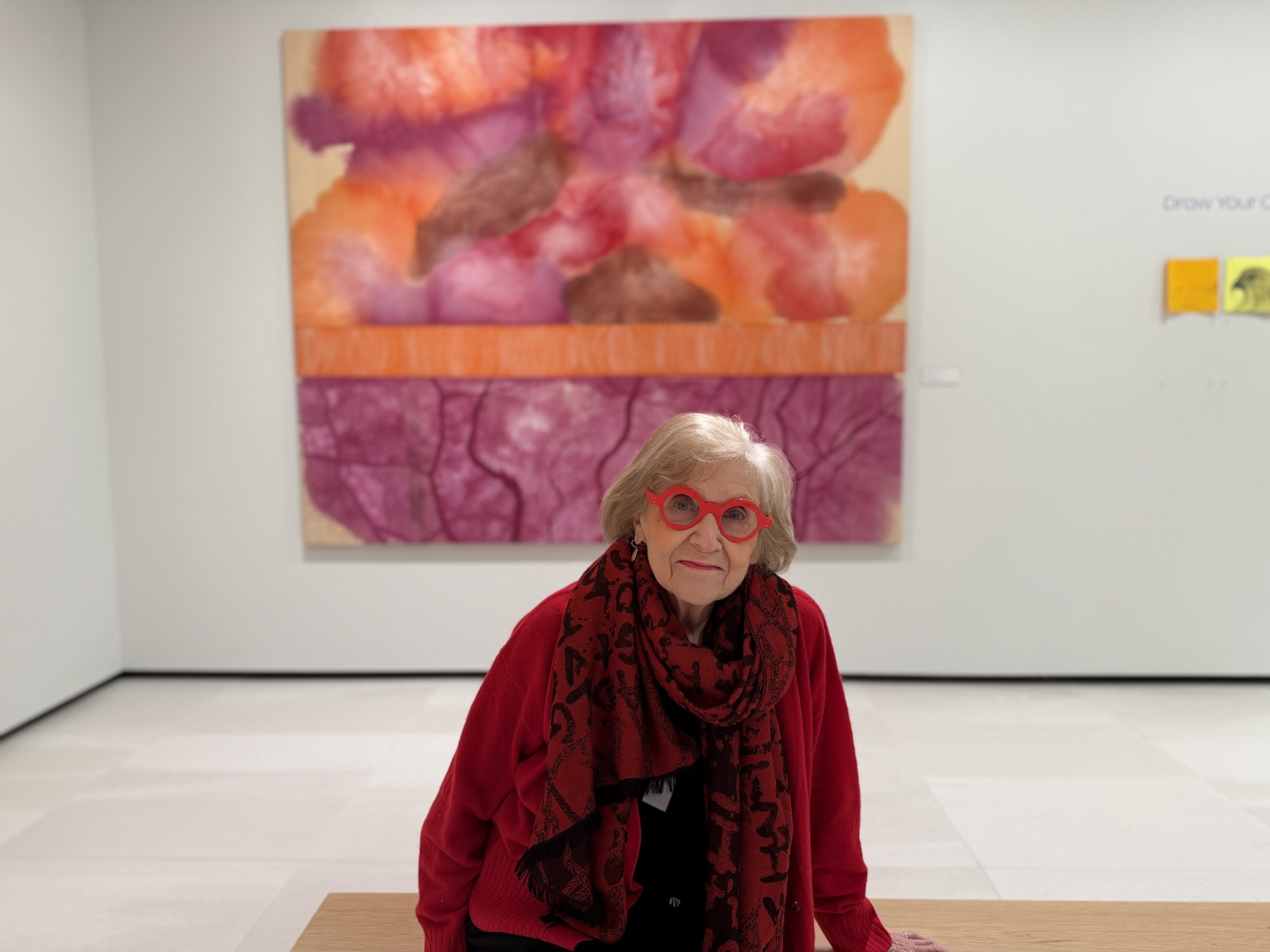
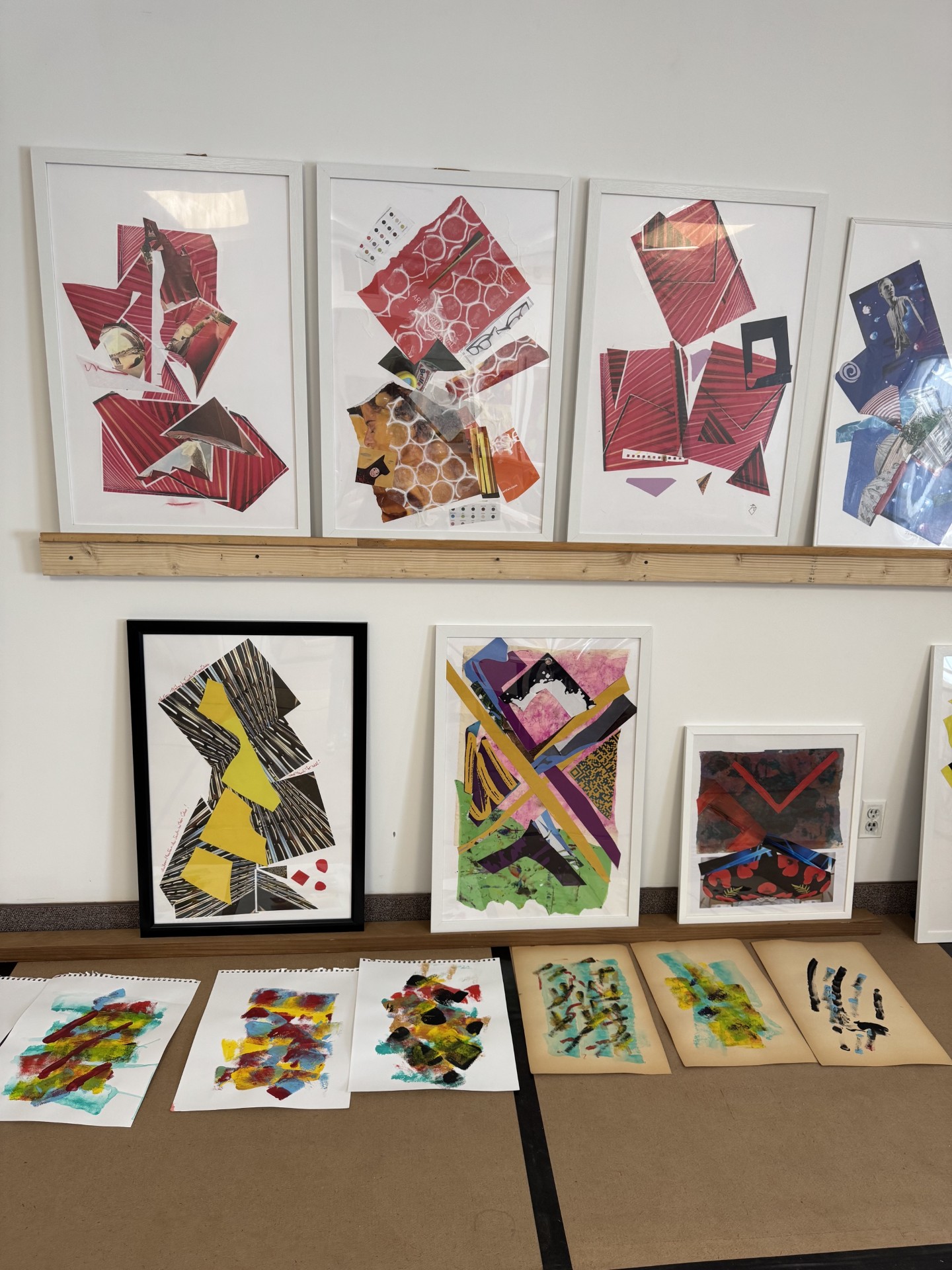
Artist Janet Langsam sat in her studio on a recent summer day wearing jeans and a pair of her trademark statement glasses. Artwork lined the walls and filled an adjacent storage room, signifying years of production.
Her studio is one of many in ArtsWestchester’s nine-story building on Mamaroneck Avenue in White Plains, a cultural resource for artists, organizations and the entire Westchester community. It’s also a building that Langsam herself helped secure for ArtsWestchester in 1998.
That’s because Janet Langsam the artist is also Janet Langsam the former CEO of ArtsWestchester, a role she held for 33 years until her retirement in 2024. But well before she led what would become New York’s largest private, not-for-profit cultural service organization, Langsam was an artist herself. And since retiring, she’s back in the studio, creating new work and partnering with curators and art galleries to exhibit work both old and new.
Picking Up Where She Left Off
Langsam began by examining older paintings, which had been rolled up in storage for decades. The canvases needed cleaning, restoring and stretching onto wooden frames, and she found help right down the hall at Patterson Fine Art Conservation.
The effort paid off. Last year, the Neuberger Museum of Art at Purchase College presented Janet Langsam: Improbable Feminist, an exhibition of her paintings from the 1960s. “Tracy Fitzpatrick [the executive director of the Neuberger] saw some of my work and decided to give me an exhibition,” Langsam said.
In a press release about the show, Fitzpatrick stated, “Janet’s work embodies the spirit of resilience and transformation. Her journey from artist to cultural icon is a testament to her unwavering commitment to the arts and community.”
A current show of her work, Horizons: Paintings by Janet Langsam, is on view through July 26 at the Hudson River Museum. The large-scale paintings, each with three distinct sections, harken to a childhood spent in the Bayswater section of Far Rockaway, Queens, which she called “the unfashionable Fire Island of its time,” and a fascination with horizons. “The beach was my backyard,” she said. “It was deserted in winter, fall and spring—no one came in the off season. We had the beach and ocean all to ourselves.”
To Langsam, horizons represent the tension of life. In each horizon painting, the top section is gestural while the bottom is more graphic. “The middle horizon is a negotiation between the two, just like in life,” Langsam explained.
Looking forward, Langsam will have a booth to display and discuss her art at Larchmont Art Festival on Oct. 17. Ana Zampino, co-owner of Atelier Modern and co-chair of the festival, said Langsam will also likely give a talk at Atelier the week prior to the festival, and there are plans to showcase her art at Atelier in early 2027.
Zampino finds Langsam’s work interesting in part because it was hidden for so long. “Her career reflects the reality that many talented women artists of her generation faced: balancing artistic ambitions with family responsibilities and limited institutional opportunities,” she said. “Her decision to set aside her own studio practice and spend decades creating opportunities for other artists becomes part of how the work is understood today.”
Finding the Courage to Make Art
Langsam didn’t set out to become an artist. She studied journalism at New York University in the 1950s and earned a master’s degree there in public administration. “I was right in the middle of all the art that was going on in the Village,” she said. “All of that was very influential.”
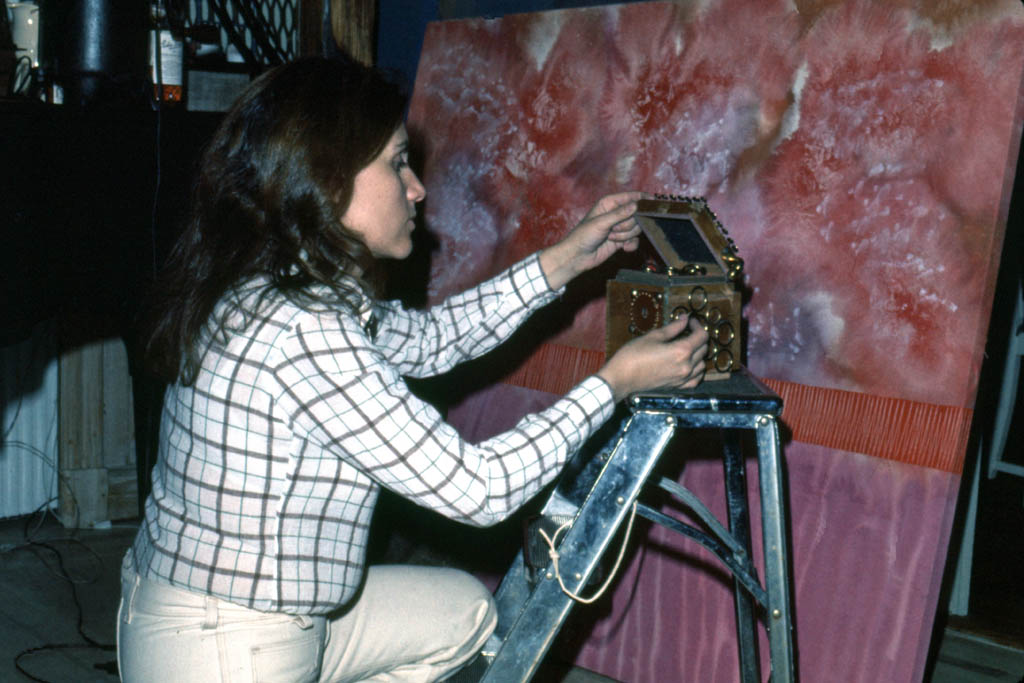
She started painting in the 1960s, but said she was intimidated. Then a neighbor, who spent weekends in East Hampton where Jackson Pollock and Willem De Kooning were living, told her she didn’t think she could paint either, but she did it anyway. Langsam said the statement gave her courage.
Langsam also made sculptures with found objects, including her children’s discarded toys. In the 1960s and ‘70s, her work was exhibited in Europe by the United States Information Agency, an effort that Langsam described as “the U.S. trying to make nice with European countries” after WWII.
Later, as a married mother of three living in northern Queens, Langsam hosted life drawing classes for her artist friends. “There were years and years of drawing in the basement,” she said. “I used to be up until four in the morning. I never had time for myself until eight or nine at night.”
Langsam said then and now she often works out her ideas in a small format with paint and collage and then works on larger pieces. In early years, her materials included the posters in ShopRite. “They said things like ‘Roast Beef $4.99 a pound,’” Langsam recalled. “They were silkscreened, and some of the surfaces were really beautiful. The grocery manager would save them for me.” These days, Langsam uses her own photography and enlarges it on her computer.
Advocacy for Artists
Langsam was active in community affairs long before leading ArtsWestchester. She held positions in the New York City administration of Mayors John Lyndsay, Abraham Beame and Ed Koch. She is also a founder and former chair of the Board of Trustees of the Queens Museum. She served as President and CEO of the Boston Center for the Arts from 1987-‘91 and later was the first Deputy Commissioner of the NYC Department of Cultural Affairs. During the Koch administration, she helped artists secure tenement buildings as studios.
“A lot of my work drew me into advocacy for artists,” she said. And now, she can once again count herself among them.
You May Also Enjoy
- [Essay] Safekeeping Patterns in The Vault
- From Riverfront to Uptown, Art Lights the Way in Peekskill
- A Summer of Renewal at The Pocantico Center
Photos (top to bottom): Janet Langsam at Hudson River Museum’s ‘Horizons’ exhibition (courtesy of the museum); Artworks in Janet Langsam’s artist studio (photo credit: Michelle Falkenstein); Janet Langsam working in her studio circa 1970 (photo courtesy of the artist)
About Michelle Falkenstein
Michelle Falkenstein writes about culture, food and travel. Publications include The New York Times, Journal News, Albany Times Union, ARTnews Magazine and (201) Magazine