African Art Museum Opens in Mount Vernon

If Mount Vernon residents found themselves passing through Hawthorne Terrace on October 18, 2025, they might have heard an unfamiliar but vibrant sound coming from 366 Hawthorne Terrace.
If they drew closer, following the lively melody, they would have been led to the Luangisa African Museum & Cultural Arts Center (LAMCAC) ’s opening celebration, where an audience of people of all ages throughout the tri-state area gathered, wood and animal-skin drums resting on and between their knees as they slapped their instruments in harmony.
“Jambo, jambo bwana; habari gani? Mzuri sana,” the crowd sang, “Hakuna matata”
The lyrics translate to a series of greetings: “Hello, how are you? Very fine,” ending with the familiar phrase meaning “no worries.”
Tanzanian composer and musician Kauezhi Lyamba led the performance. After the song finished, he asked the crowd, “What did you learn from this?” to which a voice in the back answered, “Togetherness.”
Togetherness is the spirit driving LAMCAC’s inaugural exhibit, The Tree of Life: Makonde Rhythms, Music and Harmony. The exhibit is a celebration of the Makonde tribe of Tanzania and Mozambique, whose members are known for their craft in sculpting and carving. The show will be on view through January 18, 2026.
Luangisa African Museum: A Family Affair
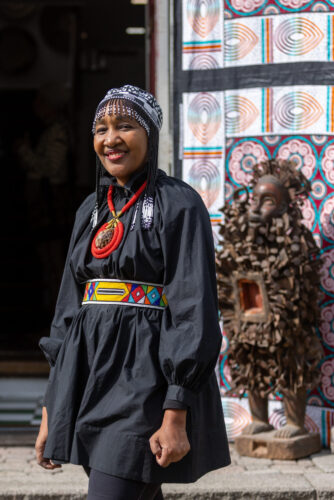
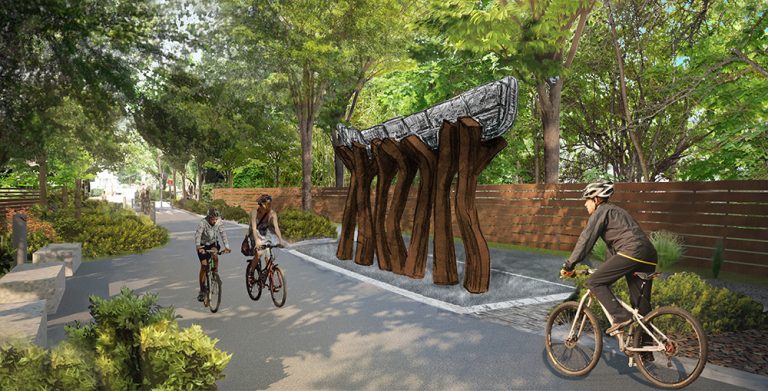
The centerpieces of The Tree of Life are the “Ujamaa” sculptures, eight-foot-tall wooden totems depicting figures that stand upon each other’s shoulders.
“The Ujamaa pieces mean a lot to me, since I was born and raised in Tanzania,” says Rose Luangisa adds. “’Ujumaa’ means family working together to achieve a common goal […] and family means everything to me.”
Luangisa was born and raised in Bukoba, Tanzania, then grew up in Arusha and Dar es Salaam. For 50 years, her mother has had a shop in Dar es Salaam, where she sells Makonde art. Her father was a politician who traveled across Africa with Luangisa, introducing her to the wealth of art throughout the continent. In 1987, Luangisa moved to Mount Vernon from Tanzania with her hefty collection of art and artifacts in tow.
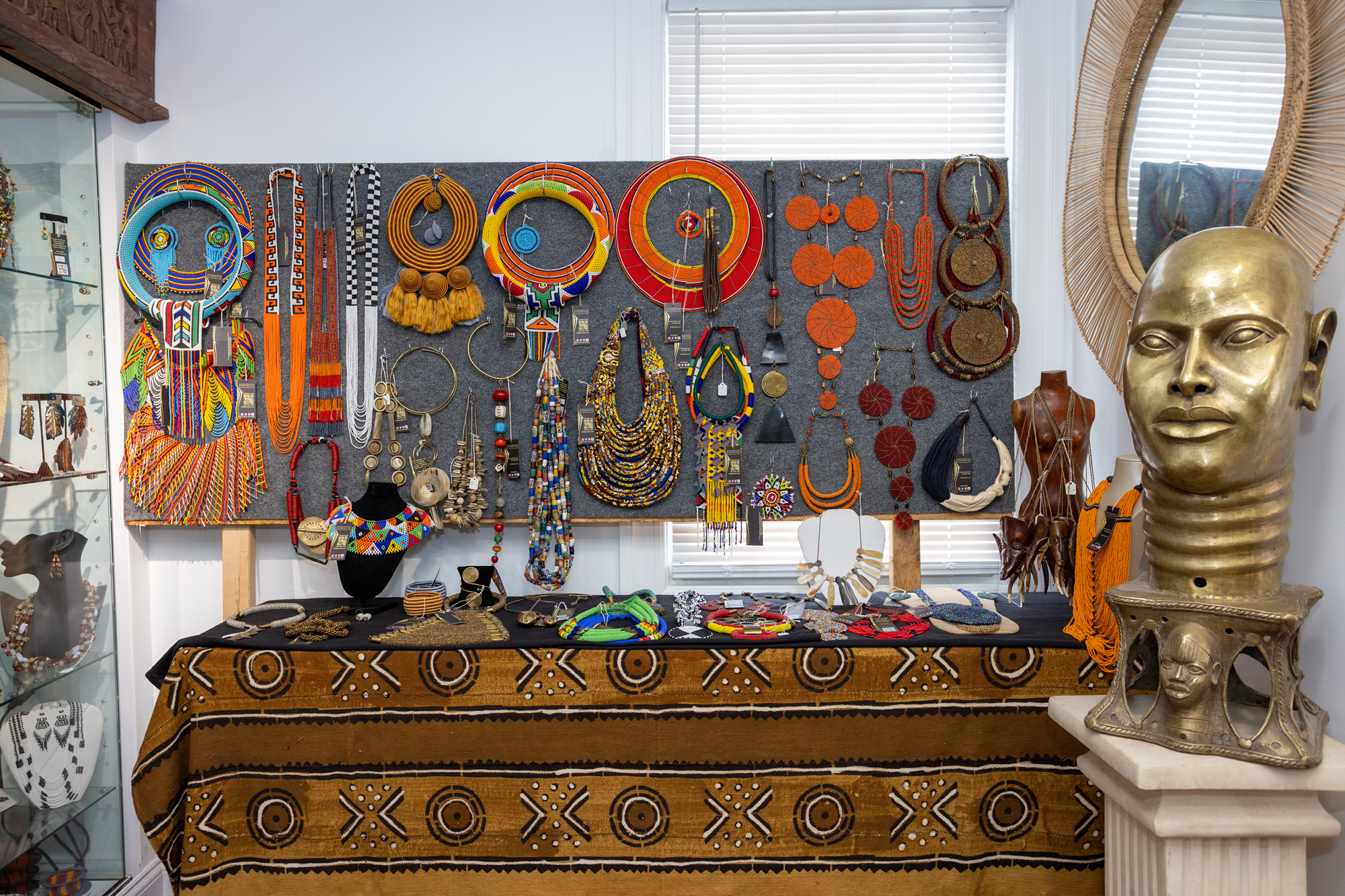
As space for her collection grew limited, she sold some of the pieces at an Africa Day celebration in Mount Vernon. She earned almost $1,000 and, seeing there was a demand for African art, subsequently opened the Luangisa Gallery in 1996. Theoutlet sells art, jewelry, home goods and more, all sourced directly from Africa.
Luangisa Art Gallery
Luangisa works with over 500 artists across Africa, most of the artisans being women from communities such as the Maasai Tribe in Tanzania and Kenya, and residents of Iringa in Tanzania.
“I really love working with women,” says Luangisa. “I came to realize that if you support the women, you support the whole family. Women are the backbone of society.”
Luangisa Gallery grew into a center of African culture and appreciation, selling to interior designers, set designers for films such as Spike Lee’s She’s All That, museums like The Smithsonian Museum of Natural History and The New Orleans Museum of Art, and customers in Westchester and beyond.
In 2020, Luangisa decided to expand Westchester’s education of African history in the form of a museum: “I think 80% of the people [in Mount Vernon] are black. And so I said, I have to give back and bring our culture to them.”
Funding the Museum
Luangisa says she and her family invested their own money into the museum. Her sister sold her truck and property in Dar Es Salaam to help fund the museum, while Luangisa says she worked from 6am to 1am every day researching grants, donors and outreach opportunities, which resulted in two recent grants from ArtsWestchester to support the new museum’s exhibitions.
Her hard work was paying off. However, this past May, the Trump Administration released a proposed federal budget for Fiscal Year 2026, revealing plans to eliminate funding to numerous arts and cultural administrations, including the National Endowment for the Arts, the National Endowment for the Humanities, and the Institute of Museum and Library Services (IMLS). This has resulted in mass freezes and cancellations of grants for museums across the United States. According to the IMLS, 10,000 museums in the U.S. have had grants and contracts canceled this year.
“We’re trying to reach out to people who will support us, people that are into the arts and know what we’re going through with all this funding being cut,” says Luangisa.
Opening Day & the Future
Through all the difficulties and self-sacrifice in bringing the museum to fruition, Luangisa African Museum & Cultural Arts Center opened on Saturday, October 18. Friends of the Luangisa family and members of the Mount Vernon community gathered in support of the museum’s mission to provide a cultural center in Mount Vernon.
“We want to make this work and help fulfill her dream,” says Paulette Henriquez.
Henriquez volunteered at the museum’s opening-day celebration. The celebration was an all-day festivity featuring a workshop on Makonde drumming, dancing, singing, led by Tanzanian composer and musician Kauezhi Lyamba.
Says Lyamba: “Africa should be visible in the eyes of kids from different angles. Not an Africa of poverty, war and disease, but the Africa of happiness, love and unity.”
Educating Audiences
Denisha Hawkins, a fourth grade teacher at Traphagen Elementary School says she believes education of African history in schools is not comprehensive.
“There is more to Africa than slavery,” she says. “A lot of great history comes out of that continent.”
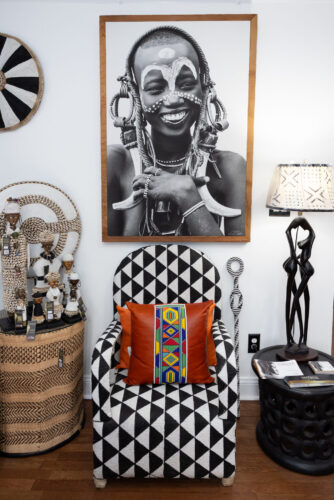
Hawkins says she sees LAMAC as a valuable place for children to learn about the history and culture of Africa.
Education will be a pillar of LAMCAC, as Luangisa plans to host workshops correlating with each exhibit. Looking towards the next year, she is planning exhibitions on African beadwork, textile work and basketmaking, each of which will have corresponding workshops that demonstrate the craft on display.
“Making baskets is tedious work, so I want the world to be able to see how much work the women put into this […] it’s very dear to me, showing the works of women.” Luangisa says. “We plan for it to be hopefully next year […] but it needs a lot of funding…But we’re gonna make it through; we’re not gonna give up.”
Following the inaugural Tree of Life exhibit, LAMCAC’s next exhibit will be a collection of Tinga Tinga art, opening in February for Black History Month.
You May Also Enjoy
- An Important Message From the CEO of ArtsWestchester
- Arc Stages: Making ‘Noises’ in Revamped Pleasantville Space
- 50 Years of The Ground Glass
- Performing Arts Center at Purchase Announces 2025-26 Lineup
(Photos by Solwazi Afi Olusola, courtesy of Luangisa African Museum & Cultural Arts Center)