Art Boss: Rethinking the Artistic Persona Today
This article is part of “As a Matter of Art,” a monthly ArtsNews column from ArtsWestchester’s CEO, Kathleen Reckling.
Thirty-five independent artists and small creative businesses call ArtsWestchester’s headquarters home. One of them is Jason Milani, an award-winning special effects and makeup artist whose studio is as much like a scientist’s research facility as a painter’s atelier. It has been customized to accommodate a range of materials and fabrication methods that allow him to produce prosthetics, props, 3D prints and 3D scans. While most of his completed projects go to filming locations in New York City, Milani chose to build his workshop in Westchester.
“Being in Westchester, off the Metro-North train line, provides easy access to the city while maintaining a better price point on rent. I also have great windows and a ton of sunlight,” says Milani. “As my industry changes and the technology surrounding it changes and grows, I can constantly adapt and grow with it.”
Creative Careers Drive the Economy
Artists play a critical role in the Mid-Hudson Valley region’s economy. Yet they’re often cast as the foil to entrepreneurs—emotional, impractical and idealistic rather than disciplined, bold and market-oriented. The reality is that building a creative career demands the same qualities we admire in business leaders: imagination, risk-taking, problem-solving, resilience and a willingness to evolve. What’s more, many creative workers wear multiple hats as small business owners and thought leaders, navigating the same demands seen across industries and developing inventive solutions along the way.
In March 2026, the Center for an Urban Future released its latest data snapshot on the arts in New York State. In the Mid-Hudson region, growth in the resident artist population is outpacing overall population growth. The snapshot also shows that creative work is expanding alongside it: from 2014 to 2024, the arts and culture sector grew faster than overall regional employment, adding jobs at a higher rate than healthcare—one of the region’s dominant industries.
The arts are a proven economic catalyst. In Westchester alone, they generate $182 million in economic activity annually through salaries, tax revenue and spending that support adjacent services. Concertgoers, museum visitors and other audience members spend an average of $27 per person beyond the cost of their ticket. And when you consider the approximately $9 million invested in cultural programming through state, county and federal grants in 2025, the return on investment is clear.
Creative Work, Community Impact
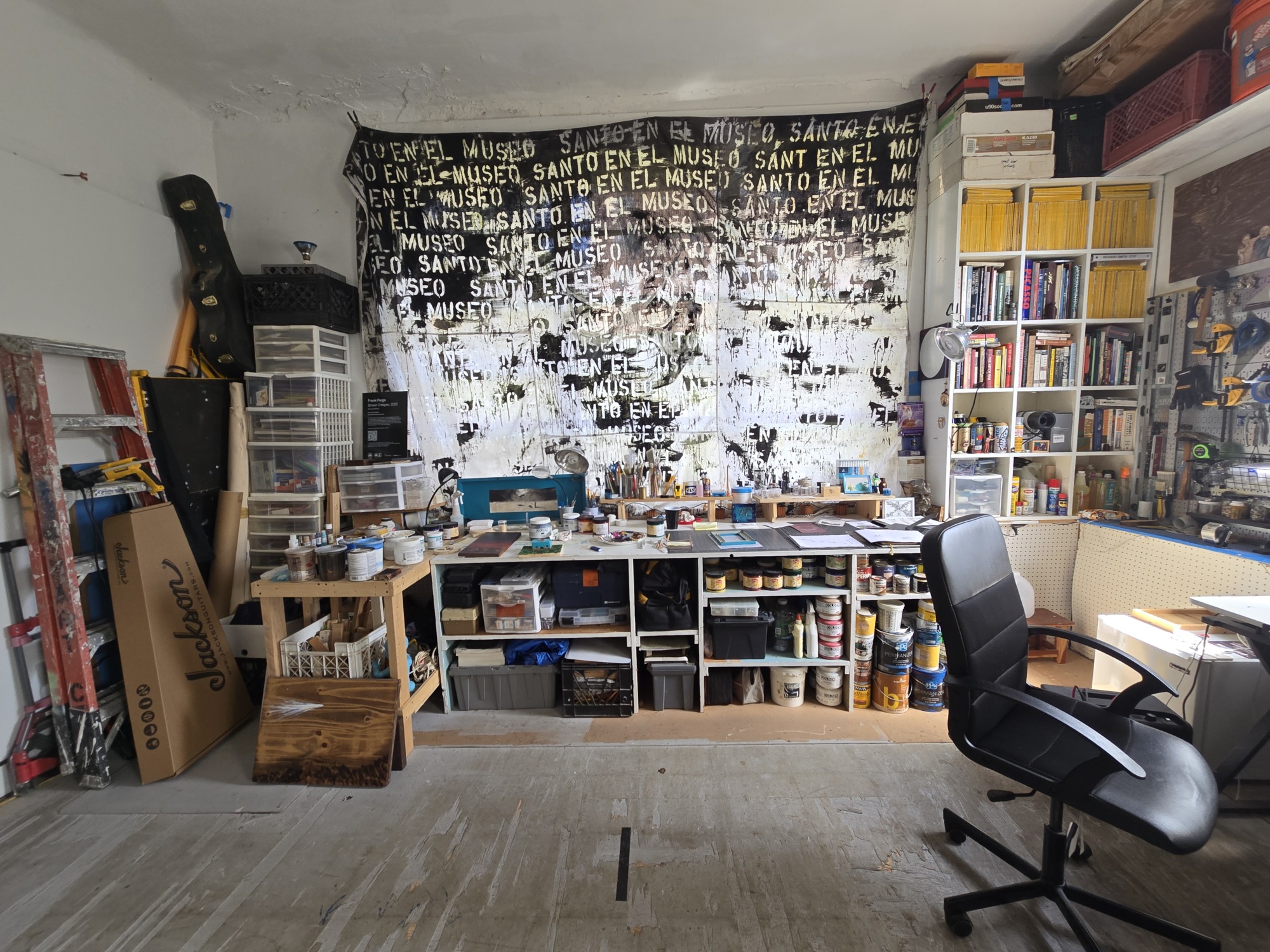
If there is any doubt about the value artists bring to their communities, look no further than the leaders behind the Yonkers-based We Art One artist collective. What began in Patricia Santos’ studio—rooted in the tradition of the salon, where artists gather to exchange ideas and collaborate—has grown into a multifaceted nonprofit. In 2020, We Art One began transforming the upper floors of a former school building on North Broadway in Yonkers into an incubator, converting classrooms into long- and short-term studios offered to creative professionals at submarket rates. Today, the award-winning organization also runs a fully outfitted co-work studio for youth and is expanding onto a second floor.
A core requirement of joining We Art One is a commitment to giving back. Professional artists lead workshops for youth and seniors, creating a pay-it-forward model that recognizes both the transformative power of arts access and the essential role of community support within the sector.
“Supporting professional artists is extremely important to us because they are the changemakers of today,” explains Santos. “When we invest in them, we nurture the next generation of creators. We encourage the artists in our collective to see their studio space as more than a place to work—it’s also an opportunity to give back to our community.”
This may be the most meaningful part of the artist-as-economic-engine story. As young people contemplate their place in a job market that will keep shifting with global events and emerging technologies like AI and machine learning, the value of safe spaces to explore creativity, push boundaries and imagine freely has never been greater.
The arts are vital to our local economy and to the region’s future. It’s time to retire the outdated image of the artist as bohemian or tortured. Instead, we should recognize artists for what they are — creative entrepreneurs — and invest accordingly.
You May Also Enjoy:
- The Guerrilla Girls Shake Up Westchester
- Caramoor’s Summer Season is Designed for Discovery
- Tarrytown Music Hall Builds Future for Academy in New (Old) Building
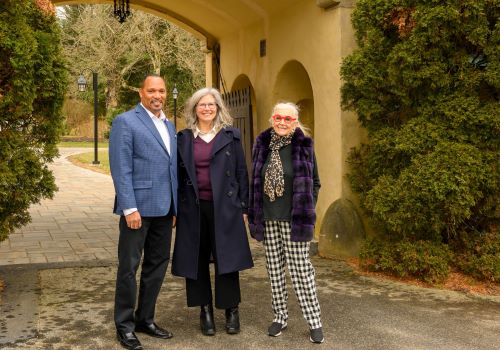
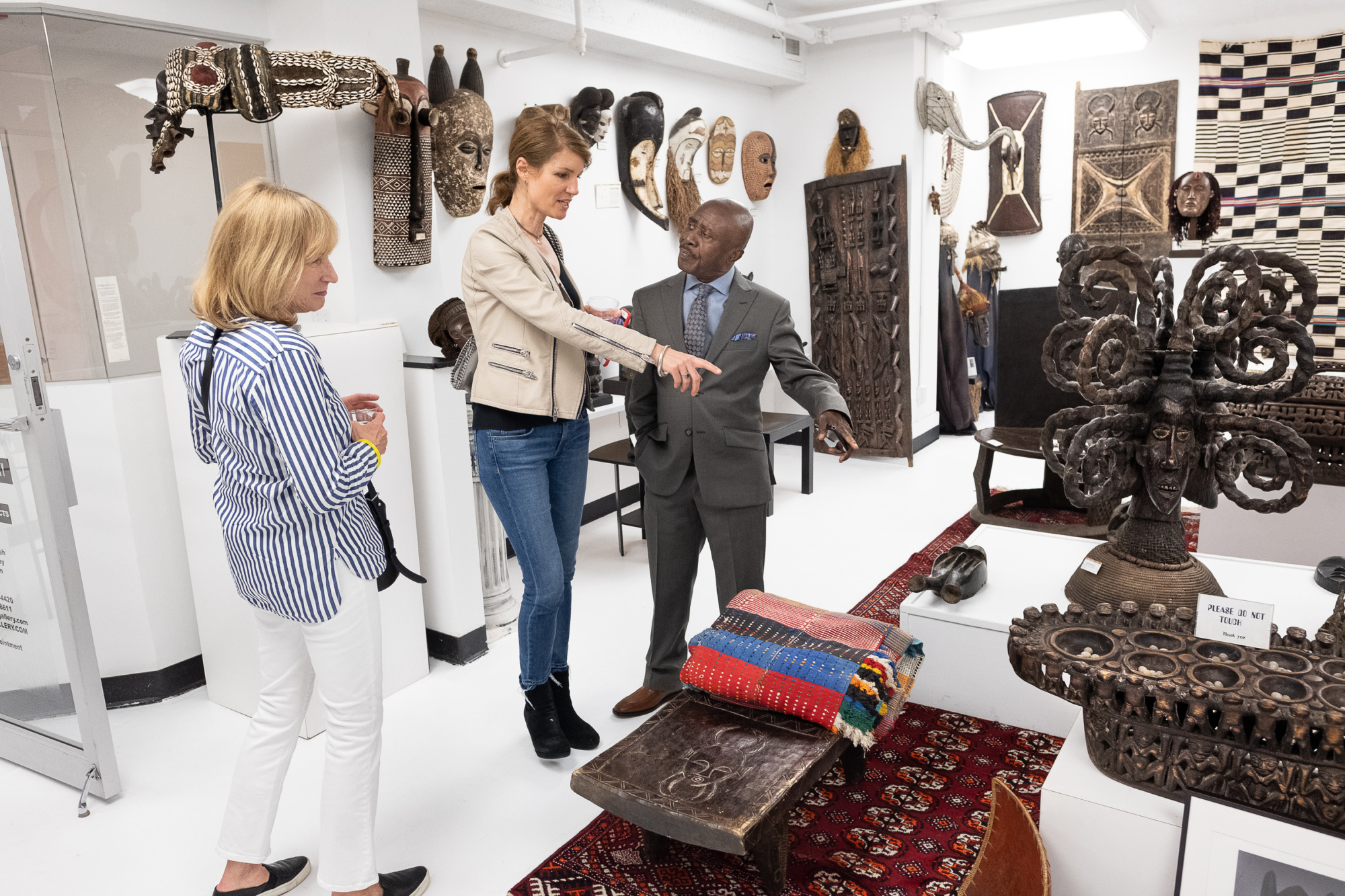
Photos (top to bottom): Dafo African Art Gallery is in ArtsWestchester’s building at 31 Mamaroneck Avenue in White Plains (photo credit: Tim Graek); artist studio at We Art One (photo by Kathleen Reckling)
About Kathleen Reckling
ArtsWestchester CEO Kathleen Reckling is an arts leader who champions creativity, equity and community engagement through the arts. Since joining ArtsWestchester in 2011, she has held key leadership roles with the organization and emerged as a trusted partner to public and private organizations seeking to integrate arts and culture into civic life. She holds a Master’s degree in Art History and a Bachelor’s in Economics from Columbia University, where she also received the Dean’s Award for alumni achievement.