Marc Straus Imagines Aphasia Told Through Verse
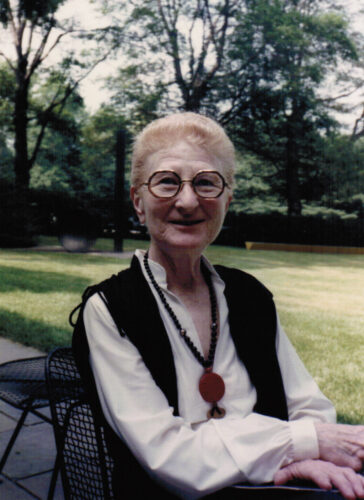
In 2007, Dora Straus, age 88, had a massive stroke that paralyzed her right side and left her unable to speak, a condition known as aphasia. Until her death a year and a half later, she lived in a nursing home, completely dependent on her caretakers.
Two weeks before her stroke, unbeknownst to anyone, Straus had stopped taking her blood thinners. She collapsed outside near her home in Somers, carrying no identification. “I found her as a Jane Doe in a hospital with full paralysis on her right side,” says her son, Dr. Marc Straus. “She was fully stroked out, but she understood everything.”
Before the stroke, Dora Straus had been fiercely independent, opinionated and combative, according to her son. Knowing his mother so well, he imagined her frustration at not be able to communicate. But he sensed what she was thinking and began writing poems in her voice. “They just poured out,” Straus says.
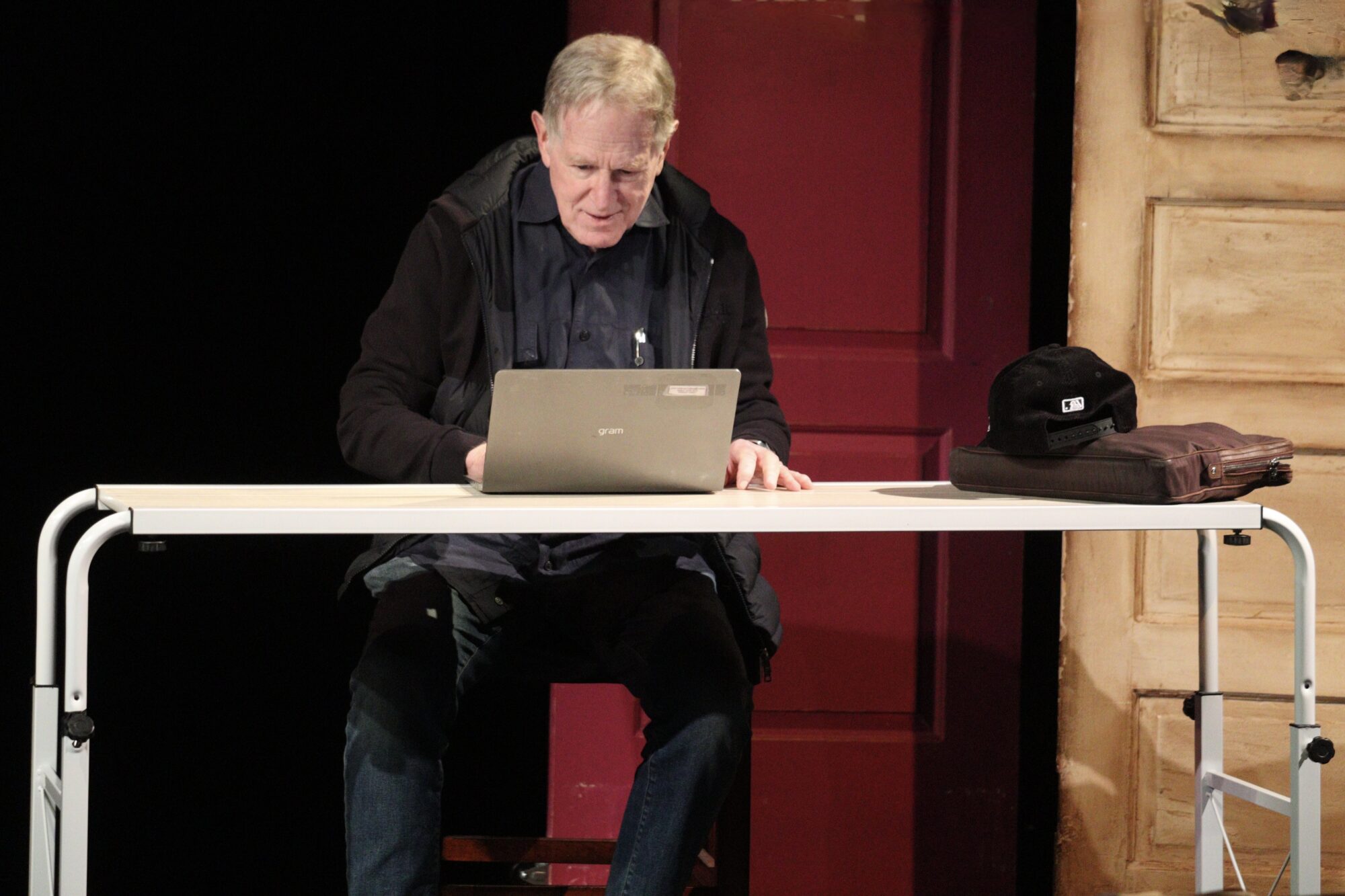
These verses have been arranged into a one-person play, Aphasia, that will be performed at Studio Theater in Exile at the Hudson Valley Museum of Contemporary Art (HVMOCA) from Friday, November 14 through Sunday, November 16. Friday’s performance will be followed by a Q&A with Straus and a reception.
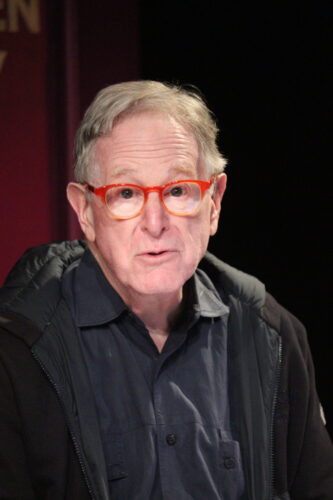
And who is playing Dora Straus? Marc Straus. He auditioned several actresses for the part, but ultimately felt they were forcing it, trying to imitate Brooklyn accents. That’s when he made the decision to play the part himself.
“She spoke to me, and I’m going to tell it,” he says.
Straus is a renaissance man who has simultaneously advanced in several careers. As a doctor, now retired, he was a renowned oncologist who practiced medicine in White Plains and wrote an authoritative textbook on lung cancer. He began writing poetry in 1991, well into his years practicing medicine, and his first book of poems, One Word, was published three years later by TriQuarterly Books, a division of Northwestern University Press. Two other poetry books followed. His memoir, One Legged Mongoose, was released by Greenpoint Press in 2021.
Aphasia is Straus’s second play. The first was based on a book of poems titled NOT GOD (2006), a tongue-in-cheek reference to a phrase people use when speaking about doctors—and when doctors speak about themselves. The eponymous play was performed at HVMOCA, twice Off Broadway, and at other venues around the country. It also formed the basis of a museum exhibition at Lehigh University’s Zoellner Art Galleries in 2004 titled The Bridge, a collaboration between Straus and artist Rick Levinson.
“If I’m not God, why ask me a question that only God can answer?” Straus asks.
Straus and his wife Livia met in high school and have been avid art collectors since 1966 (in 1971, they took out a loan to buy a painting by Ellsworth Kelly). In 2001, they founded the nonprofit HVMOCA in Peekskill, then the Hudson Valley Center for Contemporary Art, which exhibits both established international and local emerging artists. In 2011, Straus opened MARC STRAUS GALLERY on New York’s Lower East Side, followed by a second space in Tribeca. He served as president of the Board of Directors and head of the Exhibition Committee at the Aldrich Museum of Contemporary Art in Ridgefield, Connecticut for 20 years.
In his early poems, Straus wrote in the persona of his patients—a teenager undergoing chemotherapy who has lost his hair, an elderly woman in the hospital. Writing in the voice of his mother is in some ways a continuation of this work.
Dora Straus, her son says, was a very fine pianist who went straight to work after high school to help support her family. “She was sent to clean houses three days a week at age 12,” he says. “In defiance, she gave up her piano lessons.” She eventually attended college, graduating as valedictorian of her class at age 76.
In his poems, Straus has his mother reflecting on her life and commenting on the activities around her. This includes her frustration with the ineptitude of two women playing Scrabble nearby. “She was still competitive,” he says. “I hope the audience has room to laugh.”
Sadly, during Dora’s final 18 months, another son, Dr. Stephen Straus, a director at the National Institutes of Health, was diagnosed with glioblastoma, a type of brain cancer. He came to tell his mother about his illness and passed away shortly thereafter at age 60. “It was crippling news,” Straus says.
Mara Mills, artistic director at the Studio Theater in Exile, is directing the play. “It’s a rather fascinating piece,” says Mills, who also runs the educational programming at HVMOCA. “Marc sat down one night and started to write a story he didn’t know. He says it’s channeling. She was the one who talked in his mind.”
Mills says the set for the play consists of a wheelchair and hospital table on one side of the stage, and a desk with writing implements on the other. The music Dora Straus loved best will be played as transitions—Mozart, Bach, Beethoven, and Liszt, her favorite.
Mills says that of Dora’s three children, Marc is the one who’s most like his mother. “He understands her best,” she said. “This is a play about a son making sense out of his mother’s life. He’s answering his own questions about what it would have been like if she could talk.”
You May Also Enjoy
- YoFi Fest’s 13th Year Champions Diverse Corners of Cinema
- Arc Stages: Making ‘Noises’ in Revamped Pleasantville Space
- Performing Arts Center at Purchase Announces 2025-26 Lineup
- White Plains Performing Art Center Kicks Off New Season
Photos (top to bottom): Marc Straus performing Aphasia; Dora Straus; Marc Straus (photos courtesy of Marc Straus)
About Michelle Falkenstein
Michelle Falkenstein writes about culture, food and travel. Publications include The New York Times, Journal News, Albany Times Union, ARTnews Magazine and (201) Magazine