Walk Among Generations of Collected Art at This Rockefeller Estate
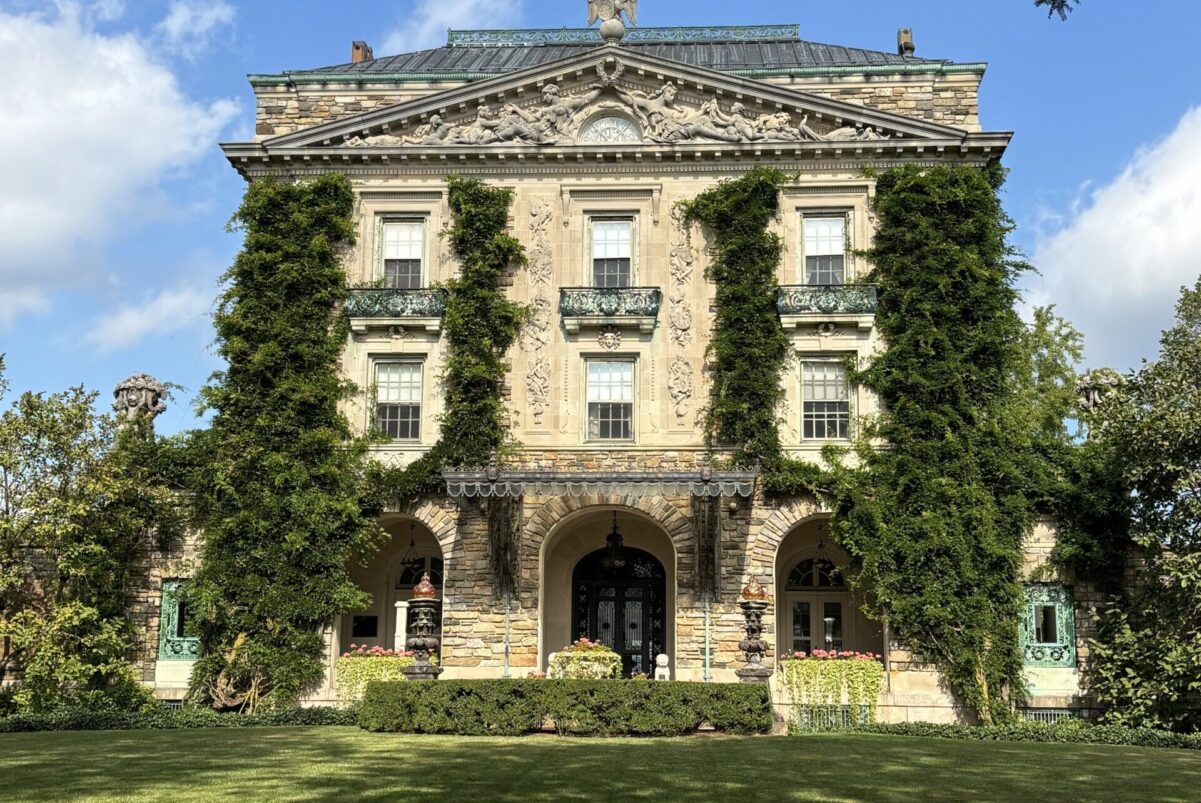
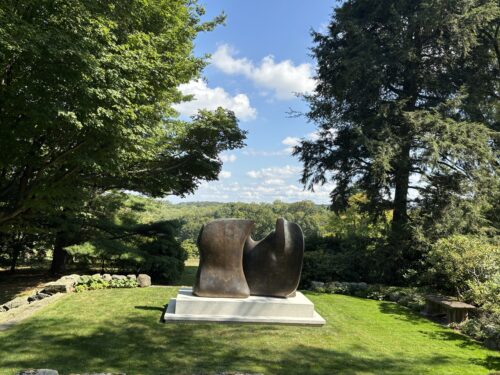
One of Westchester’s most significant modern art collections can be found in the basement of a former Rockefeller estate in Sleepy Hollow. Kykuit, and its gardens, completed in 1913, are currently open to the public and are home to works by Alexander Calder, Andy Warhol, Henry Moore, Pablo Picasso, David Smith, Louise Nevelson and more.
Upon arriving at the mansion’s front entrance, visitors are greeted by the grand symmetry of Kykuit’s neoclassical façade—as well as a sculpture by Alberto Giacometti and Constantin Brâncuși’s Grand Oiseau, poised on a pedestal like a bird about to take flight into the hills.
The house, which was home to several generations of the notable family, has experienced a sort of sequent occupance, with every generation’s aesthetic and cultural sensibilities adding a layer to the mansion’s evolution. Kykuit owes much of its extensive modern art collection to Nelson Rockefeller, grandson of Standard Oil tycoon John D. Rockefeller Sr. and the last Rockefeller patriarch to inhabit the home. Nelson inherited the property in 1961, often residing there during his time as governor of New York and as vice president to Gerald Ford.
In 1979, Kykuit and its gardens were donated to the National Trust for Historic Preservation and are maintained by the Rockefeller Brothers Fund and Historic Hudson Valley – the latter of which was founded by Rockefeller Jr. to “interpret and promote historic landmarks of national significance in the Hudson Valley.”
Kykuit: A Retreat in the Hills
Rockefeller Sr. decided to purchase land in Pocantico Hills after often visiting a brother who lived in the area. Kykuit is built on the unceded territory of the native Lenape people and, standing on the region’s highest point, is aptly named after the Dutch word for “lookout.”
“[Kykuit] was really their kind of weekend cottage in a sense, or their retreat,” says Museum Educator Kate Strankowski. Rockefeller Sr. hoped the residence would be a place where he could live “simply and quietly.” Most of his years at Kykuit were spent in retirement, when he was focused on philanthropic work that centered, according to Strankowski, on three major tenets: medical research, education and the eradication and prevention of disease.
While other preeminent Gilded Age families, like the Astors and Vanderbilts, were known to host flamboyant gatherings at their homes, Strankowski emphasizes the Rockefellers’ humbler intent behind the construction of Kykuit, adlibbing: “[Rockefeller Sr.] said ‘I don’t want it to be this ostentatious house…I want it to be a place where we can have discerning conversations [and] hang out together’… [The family was] not into showing off their wealth.”
These humble values are in part a reflection of Rockefeller Sr. and his wife Laura’s deep Baptist beliefs, which are embedded in the construction of Kykuit and were central to life in the mansion in their time. The Rockefellers did not throw lavish parties, but they did regularly host groups from their church. One of the main living room’s prominent elements is a grand oculus, or circular opening (think Rome’s Pantheon). John D. Rockefeller Jr. convinced his father to include the stately feature by arguing that the opening would help worship music from the living room’s organ to carry throughout the house.
Generational Support of the Arts
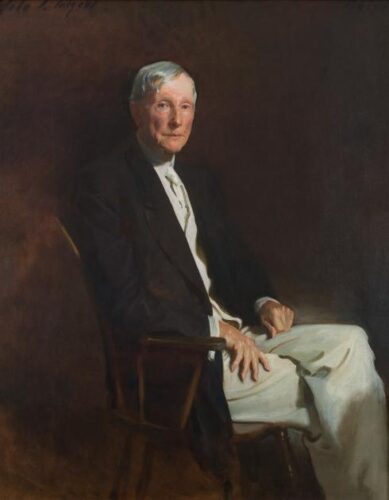
The generations after Rockefeller Sr. and Laura did not possess the same religiosity—however, a visit to Kykuit illuminates an unceasing generational love and appreciation for the arts. Kykuit boasts collected art from antiquity, nonwestern art and folk art, in addition to many featured works of modern art. Also on view are two works by John Singer Sargent from Rockefeller Sr.’s day: one of the ornate Oceanus fountain found in the mansion’s front yard and one of the legendary oil magnate himself, Rockefeller Sr., curiously positioned in the formal dining room above a table with large ceramic vultures.
Abigail “Abby” Aldrich Rockefeller, wife of Rockefeller Jr., was a folk art aficionado and one of the founders of the Museum of Modern Art (MoMA). In fact, the couple’s primary residence on West 54th Street (also designed by Kykuit’s architect William Welles Boswoth) was torn down to create space for the museum.
The Rockefellers’ close connections at MoMA (Nelson was the president of the museum twice in his life) advised Nelson’s acquisitions, including those at Kykuit. MoMA’s first director Alfred H. Barr and its renowned curator Dorothy C. Miller helped him spot emerging artists. Nelson also had personal curator Carol Uht on his team.
“But at the end of the day, Nelson was in charge,” says Strankowski, “He wasn’t just funding things; he was hands-on, constantly involved in picking the pieces and shaping the whole feel of the collection. You could say the art at Kykuit is as much a reflection of him as it is of modern art itself.”
Strankowski suspects that this love of art is connected to his mother Abby’s teachings, used to enhance Nelson’s education and accommodate his severe dyslexia. Abby may have taught her son “literacy via art”: “It’s very plausible she used art to nurture his mind and taste, and that may have helped bridge gaps in how he learned other things… kind of like they had their own language through art,” theorizes Strankowski.
Art and Everyday Life at Kykuit
Art coexisted with everyday life at Kykuit for every Rockefeller generation. The plexiglass protecting fragile artworks throughout the house is original. Nelson had it installed so that the children could run freely without fear of damaging the art.
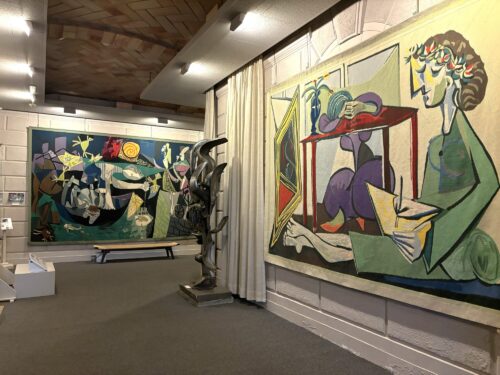
Nelson’s basement galleries, a retreat from the upper levels of Kykuit, serve as, what was at one time, a personal underground museum. Highlights, among many, include tapestries by Pablo Picasso and Alexander Calder.
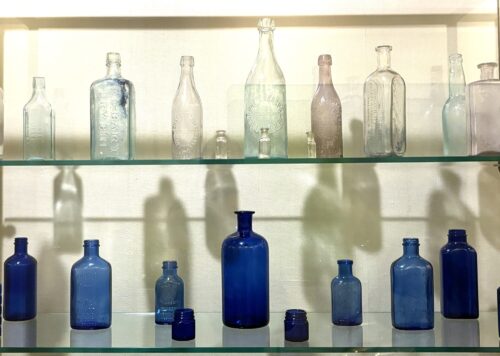
Situated near the entrance of the basement level is a glass cabinet filled with vintage bottles. A white placard to the right of the cabinet reads “BOTTLES/ American, 19th and 20th Century/ Locally excavated by Nelson Jr. and Mark Rockefeller.”
Bottles is the result of an exercise in curation and aesthetics, guided by Nelson with the hope his children would inherit his curatorial eye and passion for art. The bottles were sourced on the family’s property, often found on sites where there used to be farms. On the shelves, the bottles are color-coordinated and artfully placed, the cabinet and its contents memorializing the family’s dedication to creativity–and becoming a work of art in its own right. Of all the treasures on display in his collection, Strankowski says Nelson was most excited to share with guests the piece he created with his children.
Kykuit house and garden tours are offered each year from spring through mid-fall.
You May Also Enjoy
- Outdoor Arts Destinations in Westchester
- Hammond’s Stroll Garden Offers Respite and Tranquility in Westchester
- From the CEO: A Message About Federal Arts Cuts
- Performing Arts Center at Purchase Announces 2025-26 Lineup
- Dance Performances Take Center Stage in Westchester
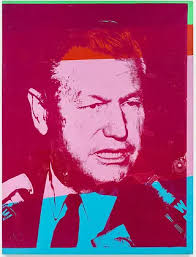
Photos (from top to bottom): Exterior of Kykuit (photo credit: Mary Alice Franklin); KNIFE-EDGE, TWO PIECE by Henry Moore (photo credit: Mary Alice Franklin); 1917 portrait of Rockefeller Sr. by John Singer Sargent; 1967 portrait of Nelson Rockefeller by Andy Warhol; Picasso tapestries in Kykuit’s basement galleries (photo credit: Mary Alice Franklin); BOTTLES by Nelson, Nelson Jr. and Mark Rockefeller (photo credit: Mary Alice Franklin)
About Mia Castellano
Mia Castellano is ArtsWestchester’s Digital Content Manager. She writes “What’s Westchester Watching?,” a monthly movie guide featuring new releases and special screenings, for ArtsNews. Mia holds a Bachelor’s degree concentrated in filmmaking and photography from Sarah Lawrence College.