Two-Part Program Introduces Raga Music of North India
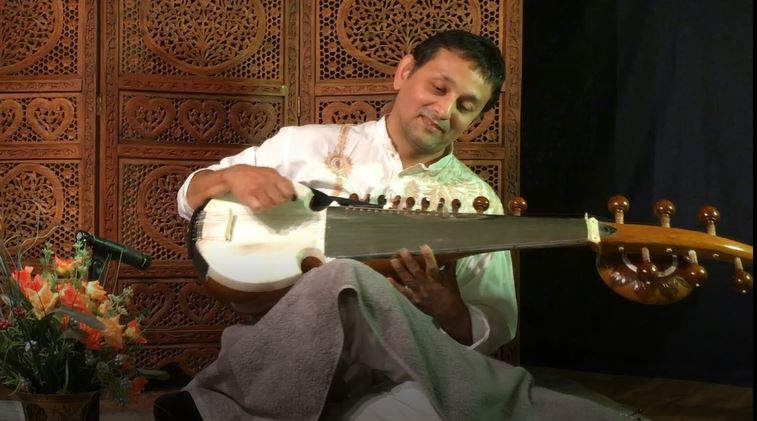
On May 6-7, a two-part program presented by ArtsWestchester and Music Conservatory of Westchester (MCW) will introduce audiences to the classical Raga music of North India. Taking place at MCW, the program aims to introduce this art form to audiences in Westchester who are less familiar with it. A seminar on May 6 will inform the audience about the foundations of Raga music, while May 7 will offer a concert of this music. ArtsWestchester’s director of folk arts, Aaron Paige, interviewed musician Satyaki Dutta, who put the program together.
Q: What is Raga Music?
A: A raga is a melodic framework. By that I mean, it is a set of notes, like a scale in western music. But in addition to that, each Raga has a specific structure –an ascent and decent along the octave. Additionally, and most importantly, there are rules on how notes can be combined to build short musical phrases. This is much like grammar in language, for which words have to be combined in a specific order to make a meaningful utterance. In a raga, musical phrases tell a story that evoke a certain set of emotions in the listener, much like a story does to a reader.
Indian classical music deals primarily with the study and presentation of over 100 such ragas and this is often interchangeably referred to as Raga Music. In India, there are two distinct forms of Raga music, namely North Indian or Hindustani Raga Music and South Indian or Carnatic Raga Music.
Q: What is your personal relationship to Raga music?
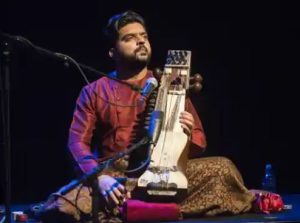
A: I come from a musically inclined family. I grew up listening to and practicing Raga music. It is something that is part of my identity. My musical journey began at the age of four, when I learned a North Indian classical percussion instrument called tabla. I was particularly inclined towards melody and eventually started learning the instrument called sarod under the tutelage of one of the towering figures of North Indian Classical Music, Padmabhushan Pandit Budhhadeb Das Gupta. The sarod is a fretless melodic instrument with eight main strings and another 13 sympathetic strings. This instrument is about 250 years old, and was created by combining rubab, which is now the national instrument of Afghanistan and an old Indian instrument called sursringar, which is almost obsolete now.
 Q: What do you hope audience members will take away from the workshop on May 6? How will the May 6 workshop prepare listeners for the May 7 concert performance?
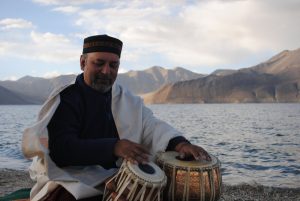
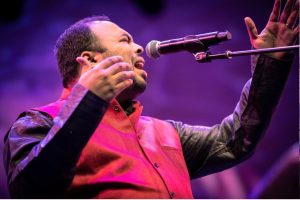
A: On May 6, we have a seminar that will cover the three main pillars of Raga music, namely Percussion, Vocal Music and Instrumental Music. Master Raga musicians will introduce these three primary areas and will guide participants in learning how to listen to and appreciate this music. Not everyone is a musician, but we all love to hear good music. While we listen, if we are able to understand what the artist is doing, we can better appreciate and enjoy that listening experience. The purpose of the seminar is to do exactly that – guide the audience through discussions and listening sessions so they begin to develop some understanding of the music. Then on May 7, there will be a concert of Raga music at the Music Conservatory of Westchester that will feature some of New York’s finest Indian classical musicians.
Q: What inspired you to create this project and present these programs in Westchester County?
A: I moved to the United States, and more specifically New York, to pursue my PhD more than 20 years ago. I have made Westchester my home since 2009. Over time, I realized that most people outside the Indian community have little to no exposure to this fascinating art form. Raga music appears very foreign and daunting to those unfamiliar with it. As a result, it is often misinterpreted and misunderstood. Through this project, I humbly aim to educate the audience about what this music truly is, with the hope that it will spark curiosity and drive listeners to explore more.
 |  |  |
|---|
About ArtsWestchester
Founded in 1965, ArtsWestchester is New York State’s largest private not-for-profit arts council. The leading funder and advocate for the arts in Westchester and Rockland Counties, ArtsWestchester works to create an equitable, inclusive, vibrant and sustainable community in which the arts are integral to and integrated into every facet of life. Building on its 60-year legacy, ArtsWestchester advances arts and culture by providing grants, bringing artists into schools and community centers, advocating for the arts, and building audiences through diverse marketing initiatives. ArtsWestchester enriches the lives of everyone in the community and operates a multi-use gallery and home for the arts at 31 Mamaroneck Ave. in White Plains, New York.

![[Essay] Cécile McLorin Salvant: Bringing A Concert Experience to White Plains](https://artswestchester.org/wp-content/uploads/2023/10/Cecile-McLorin-Salvant_photo-credit-Karolis-Kaminskas-2-768x768.jpg)