
Importing Bauhaus

May 18 – Aug. 17, 2025
Importing Bauhaus, an exhibition supported by the New York Community Trust, features works by two photographers who investigate Bauhaus-inspired architecture in New England. Mark Römisch and Stefan Radtke bring German heritage alive with stunning photographs Römisch’s new publication on the same themes will also be on preorder at the time of the exhibit at www.bauhausnewengland.com
Stefan Radtke Statement
Through my photography work, I seek to reveal the shared DNA between Bauhaus and Brutalist commercial and civic architecture in the American Northeast, where both movements found fertile ground for evolution and experimentation. While seemingly disparate at first glance – Bauhaus with its emphasis on lightness and transparency, Brutalism with its bold concrete masses – both movements share fundamental principles: adherence to strict geometric shapes, truth to materials, rejection of ornament, emphasis on technology, and the celebration of function as form.
My photographic exploration focuses on how the Bauhaus philosophies shaped our civic and commercial spaces between the 1930s and 1970s. I’m particularly drawn to how Bauhaus’s industrial aesthetics and social ideals gradually transformed into Brutalism’s raw concrete poetry.
This series employs dramatic lighting and geometric compositions to highlight the textural qualities that unite these styles – the interplay of glass and steel in Bauhaus works, echoed later in the sculptural concrete surfaces of Brutalist structures.
This ongoing series is not merely a documentation of architectural forms; it is an exploration of how the Bauhaus ethos, which sought to bridge the gap between art, craft, and technology, found its most powerful and unadorned expression in the civic architecture of this era.
Mark Römisch Statement
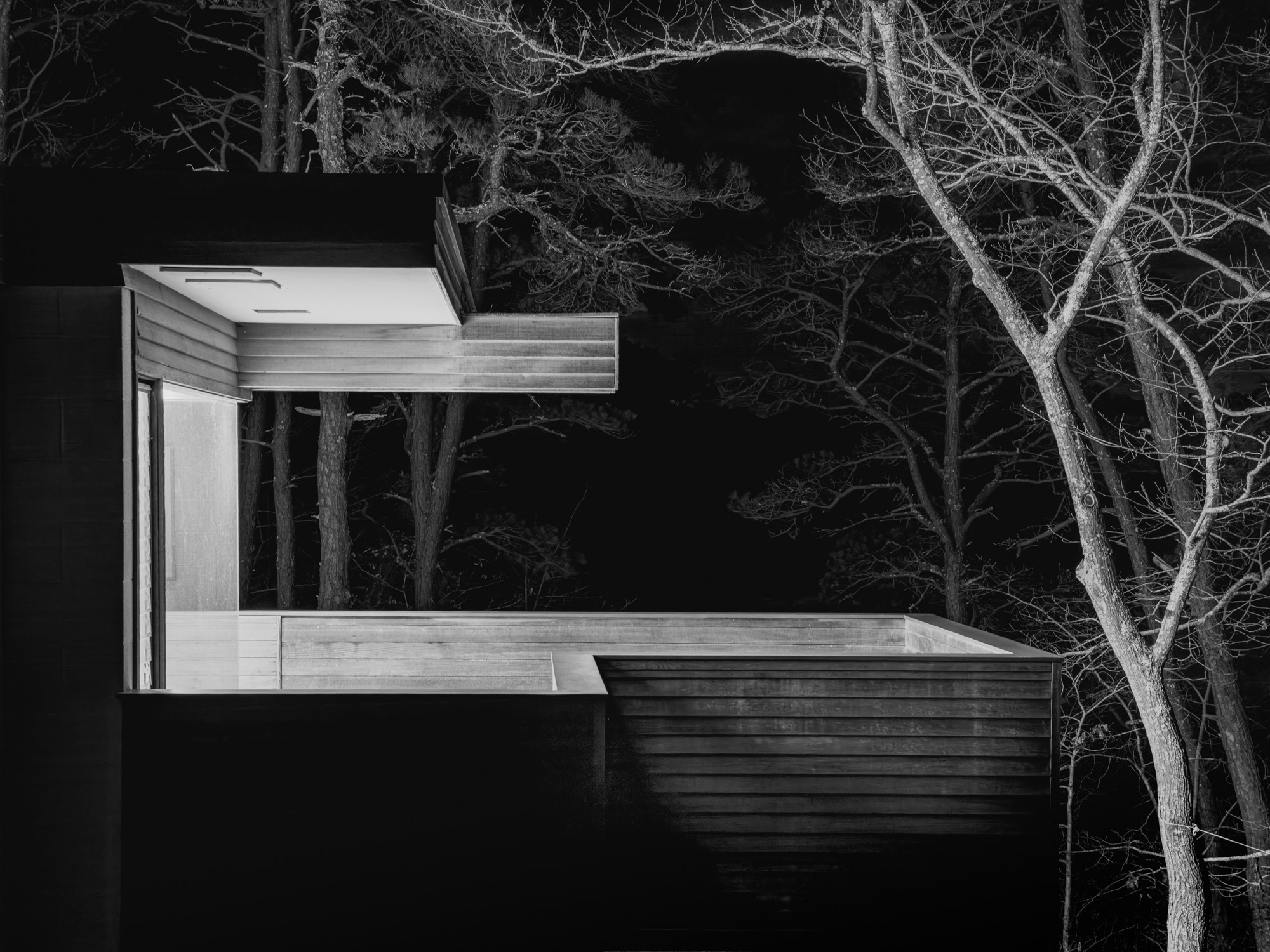
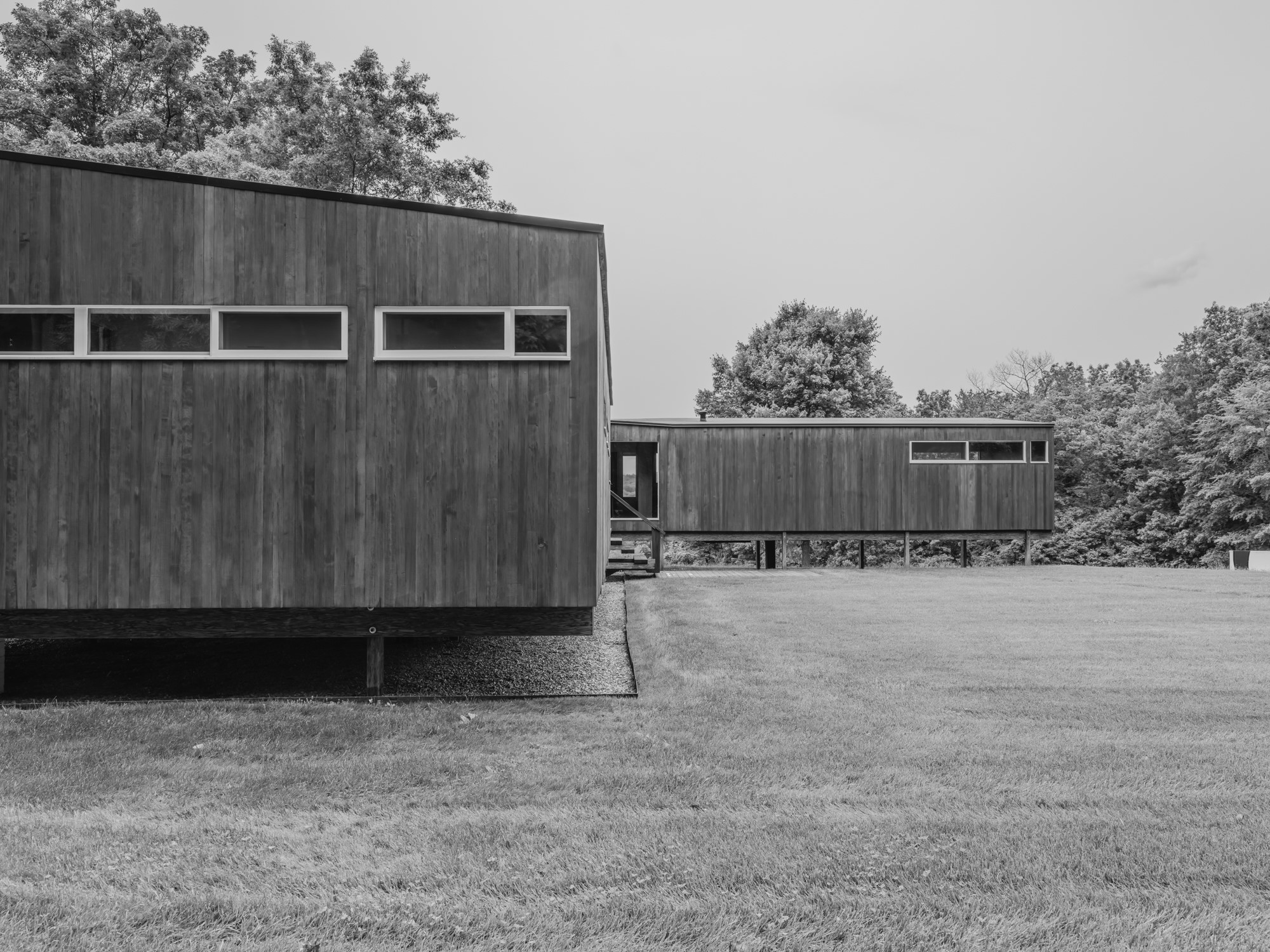
Bauhaus New England – Portraits of an Architectural Legacy explores how modernist residential architecture, shaped by the Bauhaus aesthetic, quietly lives and breathes within the New England landscape. This long-term photography project began with a fascination: How did a radical German design movement take root in the wooded hills, rocky coastlines, and quiet neighborhoods of the American Northeast?
As a photographer, I’m drawn to places where form and emotions intersect—where design doesn’t just serve a purpose but tells a story. My approach is not strictly documentary. I seek to reveal the poetry in how these homes inhabit their environment: the way a flat roof echoes the horizon or how a wall of glass opens a room to the rhythm of the trees beyond it. The images are meant as portraits—not only of buildings but of an enduring relationship between architecture and the land it occupies.
Many of the homes I photograph are privately owned, rarely seen by the public, and designed by architects deeply influenced by Bauhaus principles—most notably Walter Gropius and Marcel Breuer, who brought the school’s vision to America after fleeing Nazi Germany in the 1930s and helped lay the foundation for what we now know as mid-century modernism.
Bauhaus New England is my tribute to that vision. More than a style, Bauhaus was a philosophy of simplicity, utility, and harmony with nature. I invite viewers into a conversation between architecture and landscape by rediscovering these lesser-known hidden homes and translating their quiet presence into visual form. This conversation continues to shape the spaces we live in today.
This work was supported by a 2025 Grant for Creative Individuals from the Mass Cultural Council.

This exhibition is funded, in part, by the New York Community Trust Westchester.