
“Janet Langsam: Improbable Feminist” A Compelling Retrospective to Open April 2
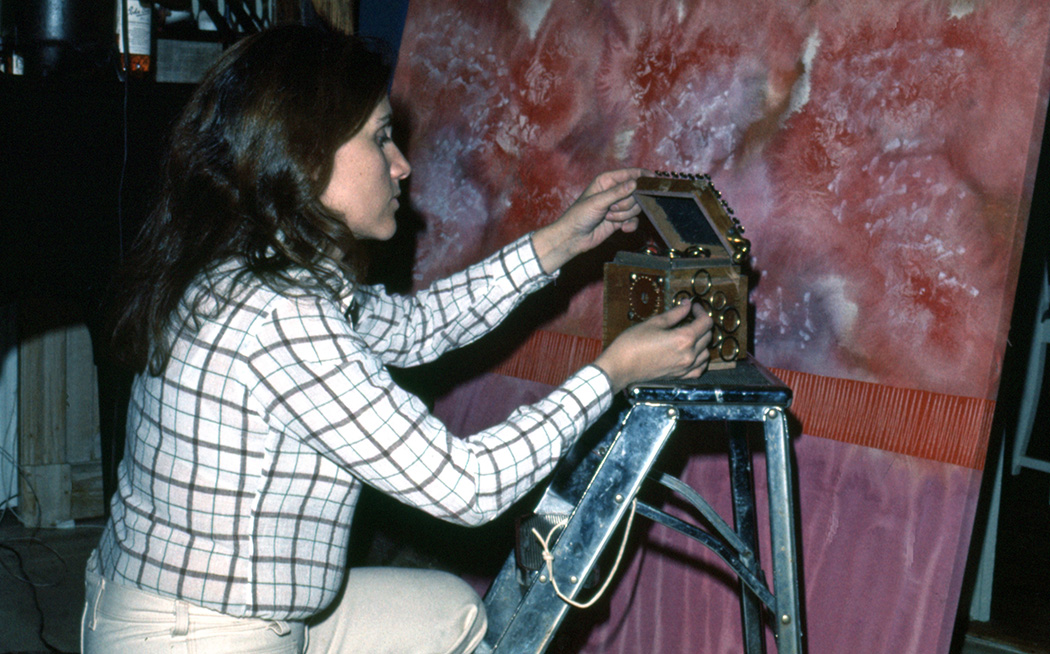
Multi-media works by the artist, feminist, and cultural icon debut in groundbreaking Museum exhibition
March 12, 2025 | Purchase, NY: Tracy Fitzpatrick, Ph.D., director of the Neuberger Museum of Art, is pleased to announce the opening of Janet Langsam: Improbable Feminist, a retrospective exhibition celebrating the multifaceted artistic practice and career of one of the region’s most influential artist-advocates.
Presenting a selection of the artist’s paintings, mixed-media works, and archival materials, the exhibition offers visitors an intimate look at Langsam’s artistic evolution before she went on to serve as New York City’s Deputy Commissioner of Cultural Affairs and CEO of ArtsWestchester.
“This exhibition highlights Janet Langsam’s unique approach to artmaking,” said Fitzpatrick. “The work is shaped by her personal history, cultural shifts, and a desire to challenge conventions.”
Langsam’s artistic production was grounded in the 1960s and 70s, a time when balancing creative aspirations with societal expectations was particularly challenging for women. While her work is rooted in that era’s feminist movement, her approach to art was deeply influenced by childhood experiences growing up in the Rockaways in Brooklyn, New York, during the turbulence of World War II. Frequently referring to herself as “a kid from the Rockaways,” Langsam found sustenance in the beaches of the Rockaway peninsula—feelings that ultimately found their way into her future paintings and collages. The ever-changing horizon of the sky and ocean became a metaphor for possibility, stability, and transformation—imagery that appears throughout her abstract paintings and collages. “No matter what is going on in the world, we can count on the dawn and the dusk; a constant in its infinite variations, whether we are there to observe or not,” says Langsam, who now lives in White Plains, New York.
Inspired by the Dada movement’s reaction to chaos, Langsam embraced a “reactionary imagination,” using found materials and everyday objects to create work that challenged cultural norms. From readymade assemblages of household items to collages made from supermarket posters and magazine images her art transformed the mundane into statements of identity, resilience, and critique.
Before shifting her primary focus to ensuring public access to art and securing funding for artists of all backgrounds, Langsam had already gained public attention with a 1972 article in The New York Times. Reflecting on that moment, Langsam noted, “It was great being featured … but I really didn’t care for the headline. I mean, really… A Day in the Life of Nonstop Housewife? Here I was, a leader in the community, exhibiting my artwork, teaching…. That headline framed everything I was doing—everything I was—within the context of being a housewife. I was a housewife, and proud of that part of my life, but it was just one part of my life.”
Fitzpatrick underscored the significance of the exhibition, stating, “Janet’s work embodies the spirit of resilience and transformation. Her journey from artist to cultural icon is a testament to her unwavering commitment to the arts and community. With this exhibition, the Neuberger Museum of Art spotlights the body of work by an artist whose impact extends far beyond the canvas.”
Opening April 2 with a public reception beginning at 5:30pm, Janet Langsam: Improbable Feminist will be on view through June 29, 2025. The exhibition is organized by the Neuberger Museum of Art and curated by Fitzpatrick with Curatorial Assistant Rem Ribeiro. Generous support for this exhibition has been provided by the Friends of the Neuberger Museum of Art.
The reception is free and open to the public; advance registration is requested. A free drop-in tour will be held on Wednesday, April 23, from 12:30pm—1:30pm.
The Neuberger Museum of Art is open Wednesday through Sunday from noon to 5pm. Admission is always free. For more information and directions, please visit the Museum’s website at purchase.edu/neuberger.
The Neuberger Museum of Art opened at the heart of the Purchase College, SUNY campus in 1974 with a core collection donated by Roy R. Neuberger, one of the greatest private collectors, philanthropists, and arts advocates of the twentieth century. Its collection has grown to nearly 7,000 objects. Today, critically acclaimed exhibitions, tours, lectures, and interactive programs for patrons of all ages make the Neuberger a center of teaching and learning for all stages of life.
Purchase College, part of the State University of New York (SUNY) network of sixty-four universities and colleges, was founded in 1967 by Governor Nelson Rockefeller. His aspiration for Purchase was to create a dynamic campus that combined conservatory training in the visual and performing arts with programs in the liberal arts and sciences, to inspire an appreciation for both intellectual and artistic talents in all students. Today, Purchase College, SUNY is a community of students, faculty, and friends where open-minded engagement with the creative process leads to a lifetime of intellectual growth and professional opportunity.
Neuberger Museum of Art
735 Anderson Hill Road, Purchase, New York 10577
914.251.6100 | [email protected]
www.purchase.edu/neuberger
Facebook: @neubergermuseumofart
Instagram: @neubergermuseum
About Neuberger Museum of Art
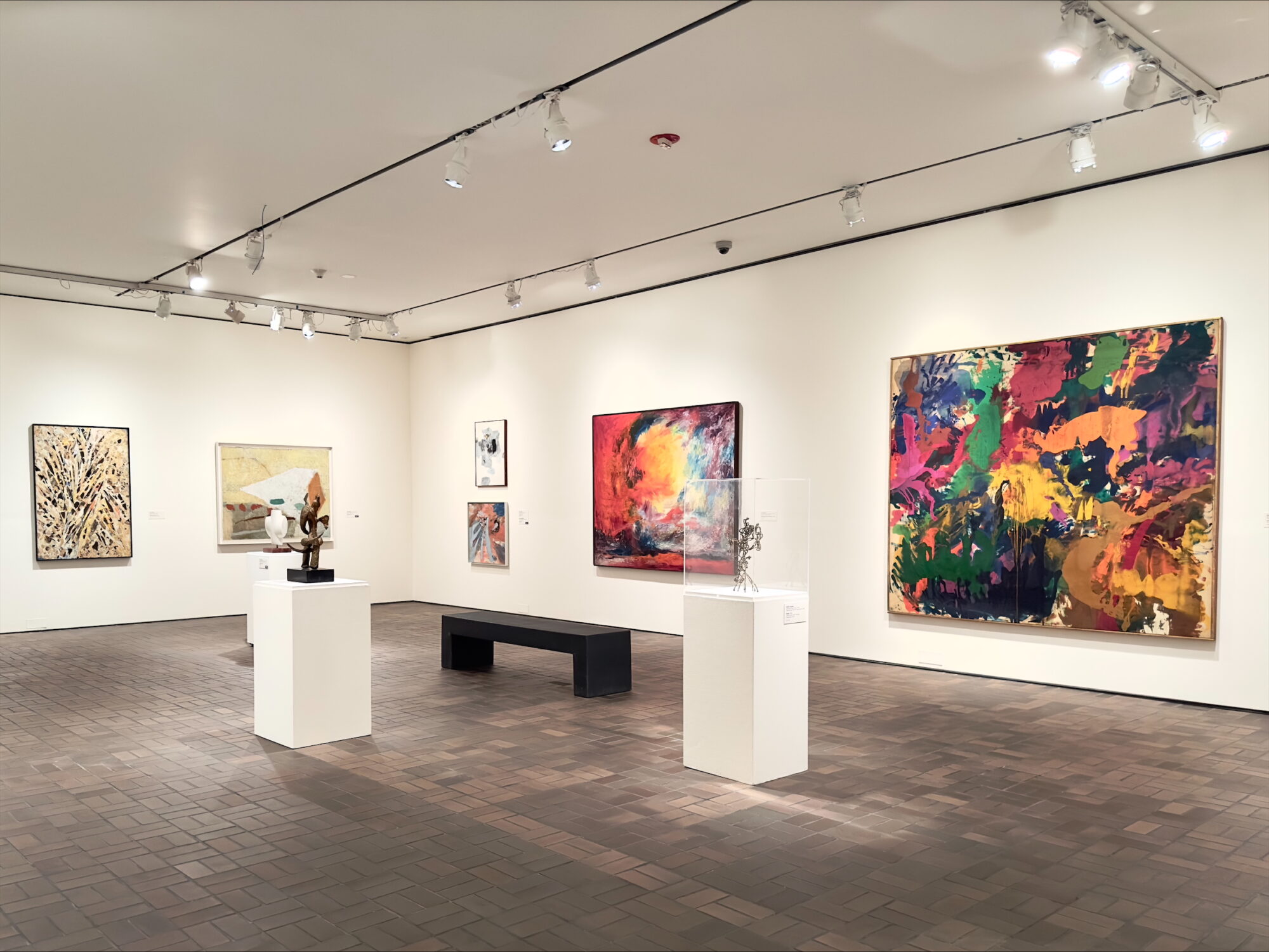
The Neuberger Museum of Art is more than a museum—it’s a catalyst for creativity, dialogue, and discovery. Located on the campus of Purchase College, SUNY, it was founded on a bold vision: that art should be lived with, learned from, and accessible to all. The Museum opened to the public in 1974, but its story began years earlier. As the first building completed on the new campus, it quickly became a hub for experimentation, where students used its unfinished galleries as spaces to think, make, and collaborate. Designed as the centerpiece of architect Edward Larrabee Barnes’s visionary campus master plan, the Museum was featured in a 1971 exhibition at the Museum of Modern Art—affirming its place at the intersection of art, architecture, and education. The Neuberger’s founding collection came from financier and philanthropist Roy R. Neuberger, one of the twentieth century’s most passionate champions of living artists. After witnessing how many great artists of the past had struggled for recognition, he vowed to change that future. He collected bold new work by American modernists—Jackson Pollock, Georgia O’Keeffe, Alexander Calder—not for status, but out of deep conviction. In 1969, Neuberger pledged 300 works to help establish a teaching museum at Purchase, ensuring that contemporary art would be a central part of the public college experience. The Museum’s foundation was further strengthened in 1974 with significant donations of African art from Neuberger’s close friends Lawrence Gussman and Elliot Hirshberg. These transformative gifts—along with landmark commissions like Threnody, Cleve Gray’s immersive response to the Vietnam War—gave the Neuberger remarkable range from the start. Today, the Museum’s collection includes more than 7,000 works, and Neuberger’s legacy continues to shape our mission. As a teaching museum, the Neuberger remains a dynamic resource for students, faculty, and the public. We present bold exhibitions, thought-provoking programs, and a collection that spans modern, contemporary, and African art. We champion today’s artists and foster space for experimentation, reflection, and fresh perspectives. The Museum is open Wednesday through Sunday, with extended hours until 8pm on the first Wednesday of each month during the semester. Visit us—and be part of what’s next.
The Neuberger Museum of Art is more than a museum—it’s a catalyst for creativity, dialogue, and discovery. Located on the campus of Purchase College, SUNY, it was founded on a bold vision: that art should be lived with, learned from, and accessible to all. The Museum opened to the public in 1974, but its story began years earlier. As the first building completed on the new campus, it quickly became a hub for experimentation, where students used its unfinished galleries as spaces to think, make, and collaborate. Designed as the centerpiece of architect Edward Larrabee Barnes’s visionary campus master plan, the Museum was featured in a 1971 exhibition at the Museum of Modern Art—affirming its place at the intersection of art, architecture, and education.